
Aizu-style Experience
【The phantom culture that colored the attire of Tohoku】 Reviving the intricate spirit of 'Aizu-style' in modern times
In the Edo period, the technique of kimono dyeing paper was monopolized in Ise (Mie Prefecture). This eventually spread to Kitakata, known for its high-quality washi and persimmon tannin, developing uniquely as 'Aizu-style'. It supported the fashion of common people throughout Tohoku, and although it once ceased in the early Showa period, a dramatic history unfolded when over 30,000 pieces of dyeing paper were later discovered in a storehouse, marking it as a 'phantom culture'.
■ Experience the artisan's craftsmanship with the niche 'stencil carving'
In this tour, we offer an experience where you can directly touch this precious technique, which remains as some souvenirs.
- Traditional persimmon paper: Just like the artisans of the past, you will work on specially made 'persimmon paper' coated with persimmon tannin, applying designs.
- Immersive time: 'Stencil carving', where you cut out intricate patterns one by one with a small knife or cutter, is so engaging that you will forget the time.
■ Dyeing designs from 100 years ago with your own hands
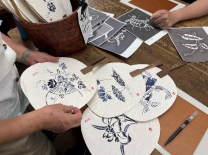
It is also possible to perform 'stencil dyeing' on items such as fans and cloth using traditional stencils.
- Moment of inspiration: The beautiful Japanese patterns that appear the moment you carefully apply color with a brush and gently remove the stencil are sure to move you.
- Connecting eras: Why not revive the sophisticated designs of Kitakata from over 100 years ago with your own hands in modern times?
For those wishing for a customized tour including the Aizu-style experience
Apply for a tour Contact